
|
|
|
Though more widely known as a non-fiction writer, Hart considers poetry his central craft. A first collection, The Climbers, appeared 1978 in the University of Pittsburgh Poetry Series. A second poetry collection, Storm Camp, is in circulation. |
 |
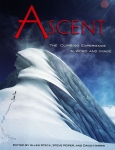 |
Poems, translations, and reviews have appeared in numerous publications including Aethlon, Blue Unicorn, Interim, The Listening Eye, Literary Imagination, The Midwest Quarterly, The New Formalist, the poetry LETTER, Southern Poetry Review, Western American Literature, Works and others. His work has twice been featured in the occasional anthology Ascent: The Climbing Experience in Word and Image, published by the American Alpine Club. |
|
Hart works with poets in the Lawrence Hart Seminars, master classes in the art that continue a family tradition dating to the 1930s. For more on this background, see www.lawrencehart.org. He has taught in poetry and prose workshops under the auspices of the Marin Poetry Center, the College of Marin, and the Mammoth Fall Festival of Writing, among others, and occasionally assists in manuscript development on an individual basis. |
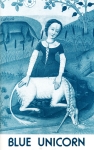 |
He is one of three editors of Blue Unicorn, a respected "little" magazine published triquarterly since 1976 in Kensington, California.
|
 Somewhat puzzlingly to its agnostic author, The Climbers won praise as a work of religious poetry. The Library Journal remarked: "Religious poetry of the first intensity can still be written: Allen Tate, Geoffrey Hill, and now John Hart have done it.” James Finn Cotter remarked in the Hudson Review, "Hart has the gifts to fashion profound religious verse.” The Yale Review singled out the poem "Elaboration on a line from the Mandean Liturgies" as "an arresting new treatment of an old dilemma: whether Gnostic beliefs can be harmonized with the adept’s inescapable love for 'Tibil,' the fallen earthly realm.” The Mandeans, a Gnostic sect in what is now Iraq, rejected love for this world—the "Tibil"—and thought its Creator both evil and incompetent. They worshipped another, an "alien" God, in charge of Heaven alone. But in one of their liturgies, a worshipper, summoned to that distant Heaven, protests: "Father, if I come with Thee/Who will be guardian in this wide Tibil?" The poem takes off from this point. |
|
ELABORATION ON A LINE FROM THE MANDEAN LITURGIES
The figure of Christ nonetheless insinuates himself into this prose-poem, also first published in Blue Unicorn and mainly concerned with the human impact on the natural world: THE PRIMATE We have been a long time coming, out of the camps and corals of the sea; out of the woods we used to hang in, swung by these very hands. The flesh has learned to ruffle up itself, into these mazy lungs of gills and leaves. It’s learned the shapes of killing and desire. From the lizards and the lemurs are we come, with the stench, and the marvelous voices. And stand here, on this eminence (lit as for departure) accidentally powerful, and small, small: out of the great unguidedness of things. Proud of the brain, bald as a hilltop, from which we sometimes think we see too far. We shall find out, we say, the sequence of the world. Shall explain the atom’s final mockery and spin. Just give us time: we’ll know in time what counsels every shadow. But all unlooked-for to have grown so hazardous! The death of kinds announces what we are. There is no predator compares to us: they eat the animal, we occupy its place. Benign and treacherous, we stroke the chinless birds. The other animals are principled: they follow their desire, but only to its limit, which is not far. We, though, lean into our sight as to a blade, nor spare the world our terrible activity. We read. We rob. We wreck. We cure. We kill. The animals are secular and sane: we only are the sacred and the dangerous. System-breakers, we may break ourselves. Overhead the comets snapped and overturned: the dying constellations. But what, oh scolders, would you have us do? We cannot go back the way we came. Cannot return among the named and nameless, to where they are true because there is no choosing. The search for better traps evolved a brain: we have it all to balance out again. And Christ, that primate, has regained the Tree, hung from these very hands.
|